In my third full year of my reading journey, I completed 42 books in 2012. I have now reached 134 total books read, averaging just slightly under my one book per week target for this past year. Nonetheless, only 5 books (including 2 re-reads) achieved my highest rating in 2012, the same number as in 2011. On the opposite end, all 5 Misses were truly bad, all scoring in the RED zone (5 rating or lower). NOTE: where applicable, I have included existing capsule reviews in previous posts.
Top 5 – Masterpieces (Rating 10/10):


Top 5 – Masterpieces (Rating 10/10):
#100 Lolita – Vladimir Nabokov, 1955 RATING: 10.0
Having viewed the two film adaptations of this controversial novel (my first 100 book milestone!), I was admittedly unprepared for the shock of the first person account of Humbert Humbert’s plot to seduce a 12 year old girl. But not for the reasons you may think. It is not pornographic; in fact Nabokov ensures that the most salacious thoughts/acts are masked in artistic prose. Nonetheless, the novel takes one into the mind of a pedophile, and Humbert almost convinces the reader that his actions are justifiable. ALMOST, but we are not deceived by his erudition, social standing and command of language(s). Absolutely frightening even in light of the proliferation of graphic Criminal Minds/Law & Order SVU TV shows. The ending is satisfying, but overall it is a sad tale about loss and no one emerges unscathed. Disturbing and complex. (FULL REVIEW is coming soon)
#99
The Book Thief - Markus Zusak, 2005
RATING: 10.
This Australian novel was a recent selection by my wife Guylaine for our ‘Four Chicks & a John’ Book Club. For me it was a re-reading of the novel that I purchased while on work in Sydney
#98 On the Road - Jack Kerouac, 1957 RATING: 10.0
This book has been described as life-changing, so I must say I had reservations when I began to read this classic account of the post-war US Beat Generation. Upon finishing it, I now wish I had read this novel as a young man!! It captures vividly the youthful yearning to move, get on the road and explore the world. Perhaps with all the travel at my age and stage, I am trying to make up for lost time? This novel is not just a buddy road trip story we see too often depicted in the movies. In addition to the spirit of experimentation (sex, drugs, & jazz music) that predates the Hippie movement, the novel further explores the nature of friendship, God’s existence, and death. In the end, it reminds us of the absolute joy of being alive and present in the moment. (LINK to FULL REVIEW)
This book has been described as life-changing, so I must say I had reservations when I began to read this classic account of the post-war US Beat Generation. Upon finishing it, I now wish I had read this novel as a young man!! It captures vividly the youthful yearning to move, get on the road and explore the world. Perhaps with all the travel at my age and stage, I am trying to make up for lost time? This novel is not just a buddy road trip story we see too often depicted in the movies. In addition to the spirit of experimentation (sex, drugs, & jazz music) that predates the Hippie movement, the novel further explores the nature of friendship, God’s existence, and death. In the end, it reminds us of the absolute joy of being alive and present in the moment. (LINK to FULL REVIEW)
#116 The Stranger - Albert Camus, 1942 RATING: 10.0
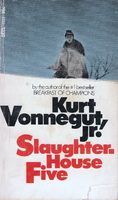
#125 Slaughter-House Five - Kurt Vonnegut, 1974 RATING: 10.0
My first foray into Vonnegut, I must say this unique non-linear book is magical. Full of whimsy, time travel offsets the horrors of war (bombing of Dresden). With the recurring "So it goes" when bad or strange things happen. And a mysterious title that is strikingly appropriate. A complex narrative that forced me to re-read the opening chapter immediately after finishing the novel (the beginning starts at the end, got it?). Believe it or not, this sequence makes perfect sense; an infinite loop, stuck in time like Groundhog Day. One of a kind writing that benefits from re-reading!
Next 5 – Near Masterpieces (Rating 9-9.5/10):


#123 Autumn of the Patriarch - Gabriel Garcia Marquez, 1975 RATING: 9.5
Marquez does it again! Delivers the account of a Caribbean dictator entirely in stream of consciousness! I mean ENTIRELY as in 255 pages! A tour-de-force literary flexing of the muscles. Only Marquez would venture into this uncharted territory. There are no punctuation, few periods, with words running on page after page with no breaks, save six 'chapters'. But what a story! How often is one given such open access to the mind of a ruthless tyrant who instills terror in order to maintain solitary power? Voyeuristic, audacious and shocking at turns, this is literature at it's finest. Freud would have recognized this man's venal appetites and basic instinct to survive.
#103
A Hero of Our Time – Mihail Lermontov, 1840
RATING: 9.5
What an incredible gem of a discovery! I had never heard of this Russian author, but a bright green used $2 paperback copy translated by non other than Vladimir Nabokov caught my attention. What I learned is that ‘A Hero of Our Times’ is considered the first major novel in Russian literature, a chief source for the great masterpieces of later 19th century. I did see themes & styles that clearly influenced Tolstoy, Dostoevsky and Turgenev. The story seems oddly modern, with the immoral, bored but headstrong “nihilist’ youth struggling to find meaning in life. The title is ironic since Pechorin is an anti-hero who destroys hearts and friendships at will with little remorse. The narrative style and five part structure (non chronological) is highly sophisticated. Brilliant story-telling with passages and quotes that linger for a long time. In the Preface, the author warns that the public’s reaction and disbelief to a man being so bad as Pechorin is perhaps “because there is more truth in this character than you would desire there to be?” Too bad Lermontov lived as passionately as his character; he died in a duel at age of 26 resulting from a trivial quarrel with a fellow officer.
#107
For Whom the Bell Tolls – Ernest Hemingway, 1940 RATING: 9.0
I
was just about ready to throw in the towel after investing 250 pages
in Hemingway's longest major novel, but then all of a sudden,
the action and intensity heated up without pause until the final of
the next 200 pages! The setting and theme chosen were grand in
scope - the story of a motley crew of of guerrilla freedom
fighters defending the Republic from the fascist forces
during the Spanish war. But nothing much happens in the first
half of the story. American Robert Jordan has a mission to blow
a crucial bridge in support of the anti-fascists, but all they do is
talk, talk, talk about it rather than taking any definitive action.
Hemingway's trademark short, terse prose appears missing in
action here, as the dialogue is repetitive and rather boring.
But I realize at the end that it was all by design. Even
in actual warfare there is much time spent waiting, talking and
worrying about the next strike and ultimate outcome. Then the
shit hits the fan, all hell breaks loose, and best laid
plans run amok. Which is exactly what happens in the
final 200 exhilarating pages of this masterful novel. The
ending packs an incredible punch.
#113 Notes from the Underground - Fyodor Dostoevsky, 1864 RATING: 9.0
What
an opening line from one of the first existential voices to
be heard; 'I am a sick man....I am a wicked man. An
unattractive man. I think my liver hurts." Such
brutal honesty from the Underground Man, the Outsider, the
Social misfit. Disaffected man. Sound familiar?
This writing heralded a new form of Realism,
which has become Dostoevsky's signature. We are
drawn in to this novella to understand the inner-life of the unnamed
narrator. What caused him to become so bitter? As the story unfolds
in two distinct sections, we begin to gleam the world around
him. A early introduction into
the psychological genius of Dostoevsky during
the time of imperial Russia.
#96
The Castle – Franz Kafka, 1926
RATING: 9.0
Kafka’s
great last unfinished novel is another staggering and surreal
exploration on the themes of alienation, bureaucracy and
helplessness. The main character is simply named K., a land
surveyor who attempts to get to the elusive Castle to fulfill his
job. Well, nothing is that obvious in Kafka’s nightmare
vision. The theme of this novel has been widely debated and
discussed. To me, it revisits the searching for God theme and
never leads to a definitive answer (perhaps because it is unknowable
or perhaps because we are unworthy). Thought provoking with
images that linger.
Top 5 Misses – Big Disappointments (Rating 2-5/10):


#119 Night Circus - Erin Morgenstein, 2011
RATING: 2.0
An
Indigo Bookstore "Heather's Pick," this fantasy novel is
dull, dull, dull! If not a Book-club selection,
I would have given up after a few opening chapters. Instead I
suffered through the mindless plot about rival Sorcerers Apprentices
in a duel to the death. 'Twist' is that boy and girl fall in
love and find a way to get around the death sentence. Turns out
black magic can come in handy! Really I couldn't make this up if I
tried. What to do when you have zero interest in the plot
or characters? Relish reading the major works of a literary
master, such as Marquez, which I did.
#108
The Alchemist – Paulo Coelho, 1993 RATING: 3.5
Since it's initial publication in Portuguese in 1988, the Alchemist has been published in 71 languages in over 160 countries selling 65 million copies. So what is the appeal? I honestly don't know!! This book is simplistic and dangerous, in my opinion. Is it a fable, allegory, self-help book, or comic strip? Each reader will need to decide. As for me, I really tried to keep an open mind the second time around. Although I am not as repelled by the ending this time (simple message that your true treasure lies under your feet) I was very tired of the overused mantra, "when you want something, all the universe conspires in helping you achieve it." But what really bothers me is the purely unbelievable passages - the boy outwits desert bandits by metaphysically turning himself into the wind, and carries on deep philosophical talks with the sun. Really, I couldn't make up this New Age stuff! I hate to admit it, but this book gets worse as one gains experience and common sense.
Since it's initial publication in Portuguese in 1988, the Alchemist has been published in 71 languages in over 160 countries selling 65 million copies. So what is the appeal? I honestly don't know!! This book is simplistic and dangerous, in my opinion. Is it a fable, allegory, self-help book, or comic strip? Each reader will need to decide. As for me, I really tried to keep an open mind the second time around. Although I am not as repelled by the ending this time (simple message that your true treasure lies under your feet) I was very tired of the overused mantra, "when you want something, all the universe conspires in helping you achieve it." But what really bothers me is the purely unbelievable passages - the boy outwits desert bandits by metaphysically turning himself into the wind, and carries on deep philosophical talks with the sun. Really, I couldn't make up this New Age stuff! I hate to admit it, but this book gets worse as one gains experience and common sense.
#130 Jonathan Livingstone Seagull - Richard Bach, 1970 RATING: 4.0
Another
Re-read best left alone and forgotten. I didn't quite get the
message the first time. "Fool me once, shame on you. Fool
me twice, call me an idiot." What a bunch of New-Age
(before the term was popular) dribble! This is equivalent the
'the Little Engine that Could' and that is the problem.
Except otherwise reasonable-minded Adults were reading this little
book and made it a runaway bestseller. The focus on
self-perfection doesn't bother me, but really, the highest order is
to appear instantly anywhere in the Universe, because "you have
already arrived". Enough said!
#126
The Public Image - Muriel Spark, 1968 RATING: 4.5
This novel by the author of 'Prime of Miss Jean Brodie'
held a lot of promise. A satire on the celebrity obsessed culture
we take for granted as omnipresent. Alas, the plot failed to capture
my interest. The characters were self-absorbed, but did not resonate.
They appeared cartoon sketches. A disappointment given the
fascinating premise. Perhaps that was the problem. High
expectations!
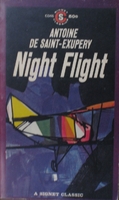
#128 Night Flight - Antoine Saint-Exupery, 1931 RATING: 5.0
I
was expecting more of 'Petite Prince' magic in the author's early
novel, but it turned out to be a realistic depiction
of the early days of aviation, when taking a Night Flight to deliver
mail was perilous. The thin plot-line just
doesn't hold up in today's advanced Space Age. The story seems quaint,
a relic to by-gone age. Not necessarily bad, just not very
captivating. Oh, and a death occurs. Surprise!
